If you’ve ever heard the advice “don’t rewind two yarns into one cake before knitting,” you may have wondered about one obvious exception.
After all, many yarn companies sell commercial marled yarns that are already wound together. If those yarns work perfectly well, why is rewinding your own yarns into a single cake often discouraged?
The answer lies in how the yarn is made.
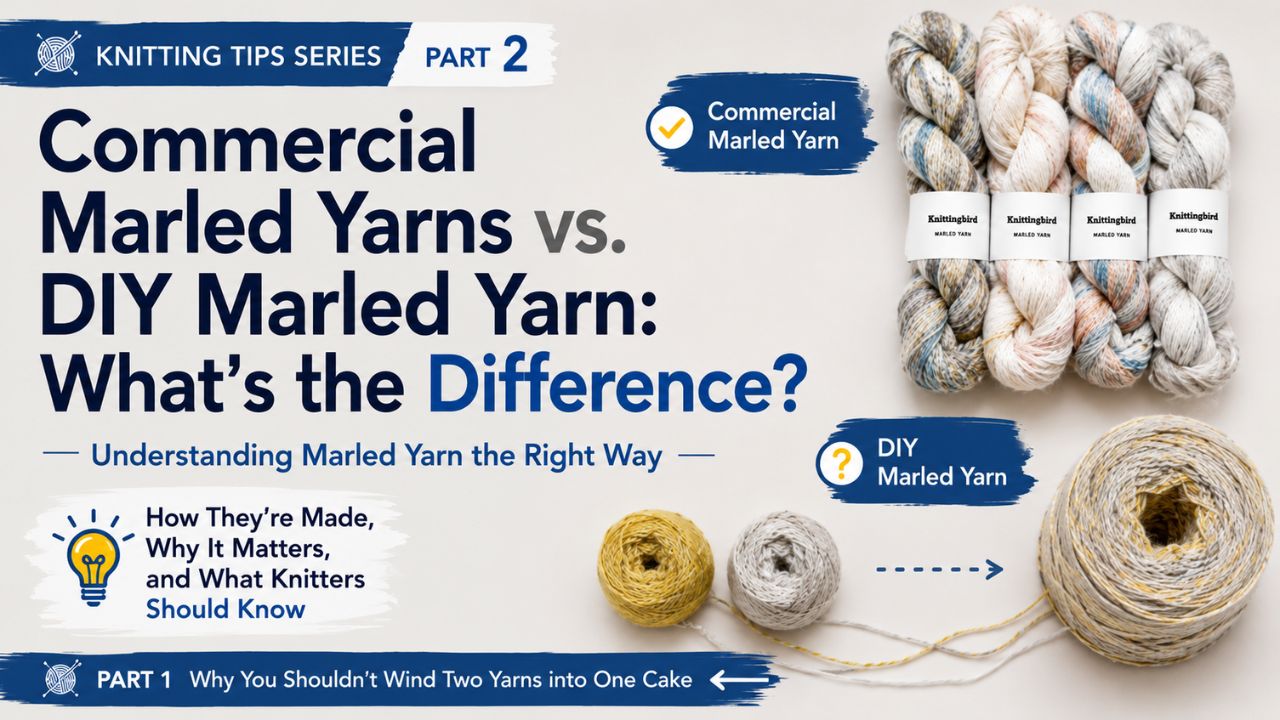
Although commercial marled yarns and DIY marled yarn cakes may look similar, they’re produced under very different conditions and are intended to be used in different ways.
In this article, we’ll explore what makes commercial marled yarns different from holding yarn double with your own yarns, why that distinction matters, and how you can choose the best approach for your next knitting project.
“But What About Commercial Marled Yarns?”

At this point, you might be wondering:
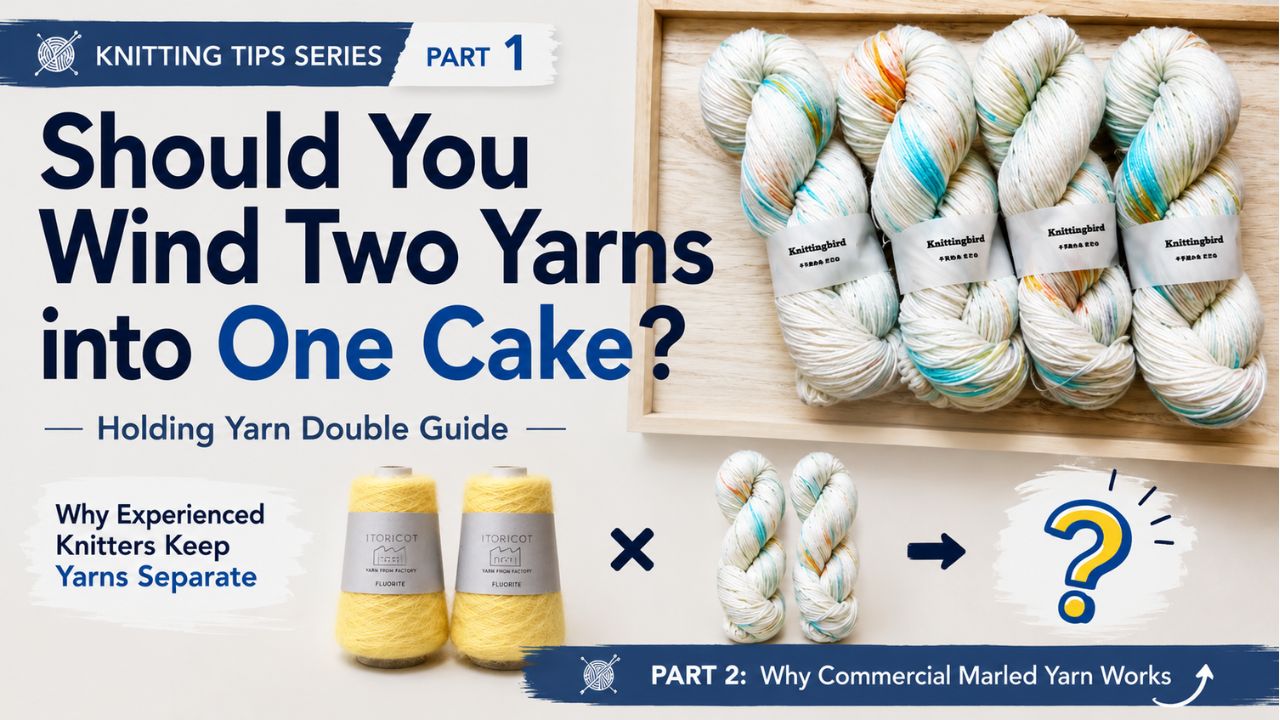
“If that’s true, why do companies like Knittingbird and ITORICO sell yarns that are already wound together? Aren’t those essentially the same thing?”
That’s a great question.
The key difference is that this article is specifically about rewinding multiple yarns together into a single cake at home.
Commercial marled yarns are produced during the manufacturing process under controlled conditions, which is very different from winding two separate yarns together with a household ball winder.
The exact production methods vary from one manufacturer or indie dyer to another. However, commercial production generally allows the yarns to be fed and wound under consistent, carefully controlled conditions—something that’s difficult to reproduce when winding yarn by hand at home.
In addition, commercially produced marled yarns are often designed with compatible fibers, yarn weights, and overall balance in mind. They’re created as finished products intended to be knit exactly as sold.
For that reason, it’s best to think of commercially produced marled yarns and rewinding two yarns of your own choosing into a single cake at home as two entirely different situations.
Tips to Prevent Yarn Balls from Rolling Away and Yarns from Tangling
When knitting with two separate yarn balls, a few simple tools and habits can make the process much smoother. Here are some of the easiest ways to keep your yarn from tangling:
- Place each yarn ball in its own project bag or container.
- Use a yarn holder or yarn bowl.
- Choose cone yarns whenever possible.
These small adjustments help each strand feed evenly, reducing twists and tangles while making stranded or marled knitting much more enjoyable.
When I’m working with regular wound yarn balls, I keep each one in a small drawstring bag like this.
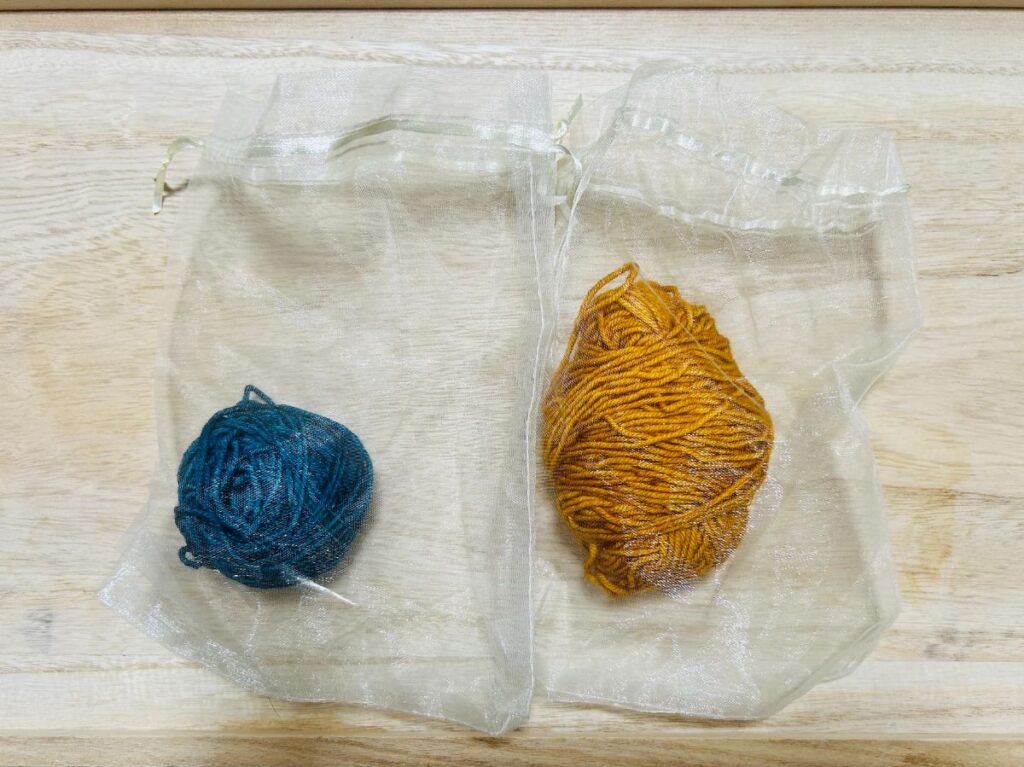
A knitting friend gave these to me, so I’m not exactly sure what they were originally sold for. She told me she accidentally ordered a large pack on Amazon and shared some with me.
They’re made from sheer organza with a satin ribbon drawstring. The lightweight fabric lets the yarn unwind smoothly while keeping the ball contained, which greatly reduces rolling and tangling.
I’ve also seen knitters use disposable mesh sink strainer bags (the kind used in kitchen drain baskets) as an inexpensive alternative. They work surprisingly well for keeping yarn balls under control.
For cone yarn, this is the holder I recommend.
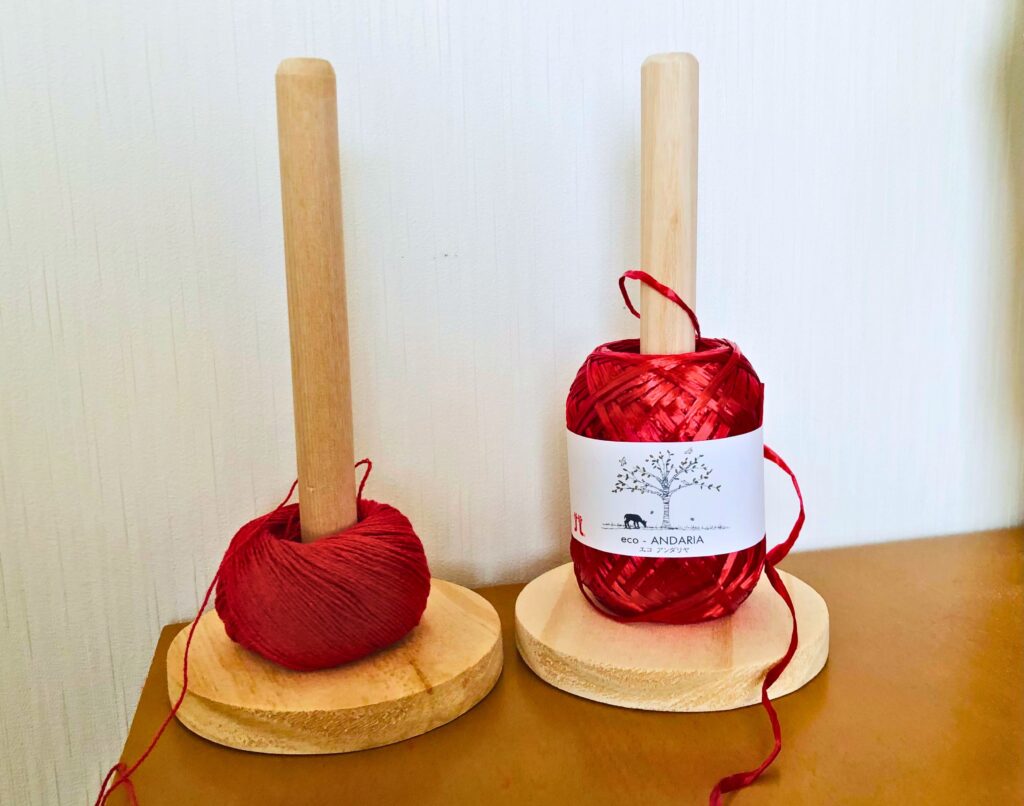
I originally bought this for cone yarn, but it also works well with center-pull yarn cakes.
It’s actually a kitchen paper towel holder from Seria that I purchased several years ago. I’m not sure whether it’s still available, but similar stands are easy to find.
You don’t need to buy the exact same items I use. There are plenty of affordable alternatives that work just as well, so it’s worth experimenting until you find a setup that makes your knitting more comfortable and enjoyable.
Conclusion
To summarize:
- When holding yarn double, the standard approach is to pull one strand from each separate yarn ball and hold them together as you knit.
- Rewinding multiple yarns into a single cake at home can lead to uneven tension due to differences in elasticity, twisting, and the difference between the inner and outer layers of the yarn cake.
- Real-world experiences shared on Yahoo! Chiebukuro and Reddit, along with advice from the authors of Tin Can Knits, all support knitting from separate yarn balls rather than rewinding them together.
- Commercially produced marled yarns are manufactured under different conditions, so they shouldn’t be considered the same as a DIY marled yarn cake made at home.
When you’ve invested hours—or even weeks—into a knitting project, it’s worth choosing a method that lets each yarn perform as intended.
The simplest approach is also the safest: keep your yarns separate until you’re ready to knit, then hold the strands together as you work.
It may take a little more preparation, but that small extra step can help you maintain more consistent tension and create a smoother, more beautiful fabric.
Finally: What Do I Personally Do?
Throughout this article, I’ve explained why I don’t recommend rewinding yarns together into a single cake before knitting.
Ironically, I’ve never actually tried making a marled yarn cake with a household ball winder myself.
The first reason is simple:
It just seemed like more work. 😄
But there was another reason as well.
For a long time, I’ve wondered:
“Different yarns shrink differently and have different amounts of stretch, don’t they?”
Holding yarn double is a wonderful technique, but when two yarns with different characteristics are treated as a single strand, it always seemed reasonable to me that there could be some effect on tension.
While researching this article, I read through discussions on Yahoo! Chiebukuro and Reddit. Seeing so many knitters recommend working from separate yarn balls reinforced my feeling that this is the safer approach.
That said, there’s still one question I’d love to explore further.
How many knitters have actually experienced problems after rewinding multiple yarns into a single cake with a household ball winder?
My guess is that, if issues do occur, they’re probably more noticeable in larger projects—such as sweaters, cardigans, or blankets—where the yarn travels a much longer distance.
On the other hand, for smaller projects like hats, arm warmers, or bags, the difference may be so small that many knitters never notice it at all.
I’d love to hear more real-world experiences from other knitters.
If you’ve tried rewinding yarns together before knitting, please share your experience in the comments below.
Whether everything worked perfectly or you ran into unexpected problems, your story could help other knitters decide which approach is best for their next project.
Read Part 1: Why You Shouldn’t Rewind Yarns Together Before Knitting
If you haven’t read the first half of this series yet, be sure to check it out.
In Part 1, I explain why rewinding multiple yarns into a single cake before knitting can cause uneven tension, and I share advice from experienced knitters as well as real discussions from Yahoo! Chiebukuro and Reddit.