“I want to hold two yarns together and create my own unique fabric!”
Holding yarn double (or working with two or more strands held together) is a fun way to combine different colors and fibers into something truly unique.
One of its biggest appeals is the freedom to create fabric that has a look and texture you simply can’t buy as a commercial yarn.
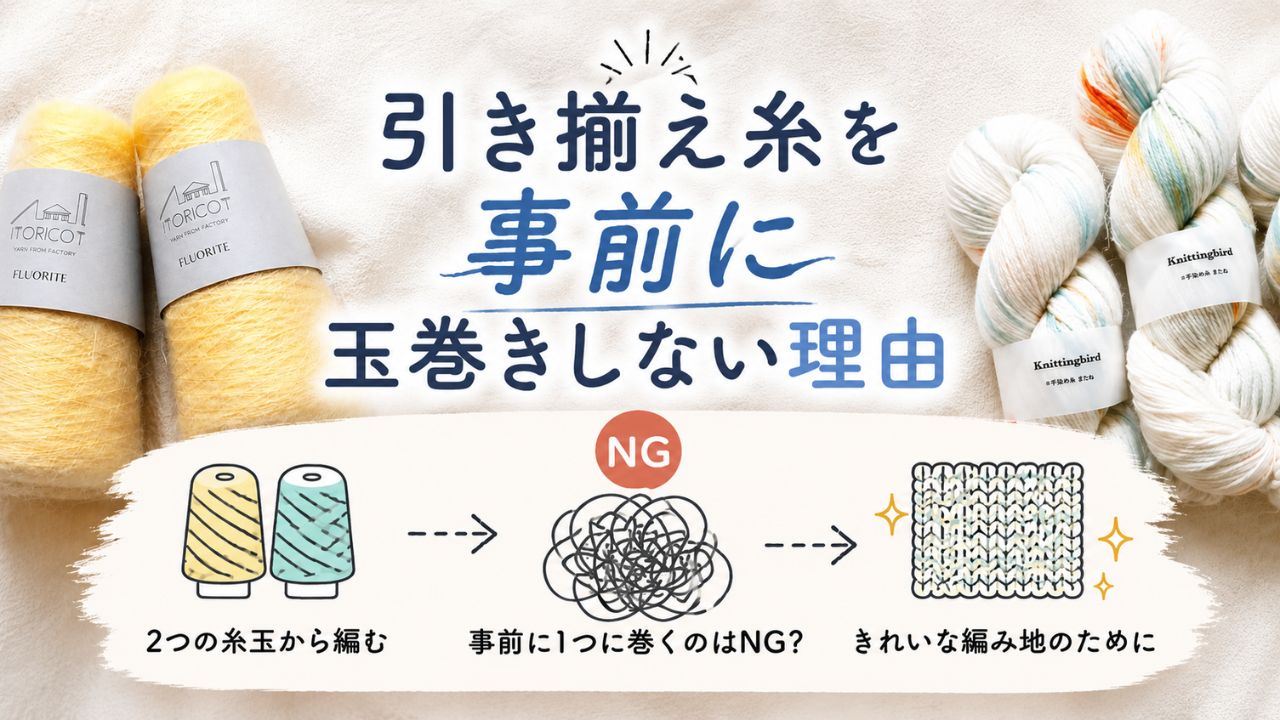
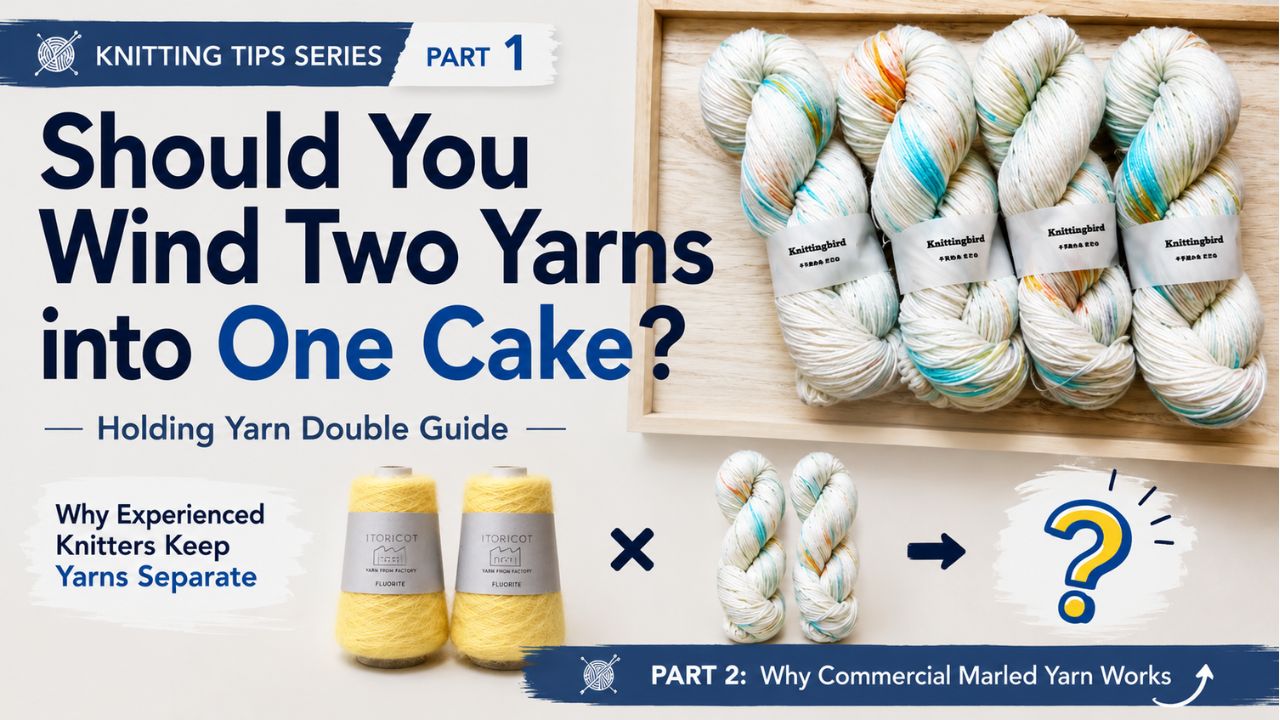
When browsing social media, you may have noticed knitters winding two separate yarns together into a single cake with a ball winder—or even by hand—before they start knitting.
At first glance, this seems convenient. A single cake is easier to manage than multiple balls rolling around.
However, many experienced knitters and designers recommend keeping each yarn in its own cake and holding them together only while knitting.
In this article, we’ll explain why it’s generally better not to wind held-together yarns into one cake at home, looking at the physical properties of yarn, the mechanics involved, and advice based on real knitting experience.
Why You Shouldn’t Wind Held-Together Yarns into One Cake Before Knitting

Reason 1: Different Yarns Stretch Differently
One of the most popular yarn combinations is fingering-weight wool held together with lace-weight silk mohair.
Although these yarns look similar when worked together, they behave quite differently.
- Wool: Naturally elastic and stretches easily under tension.
- Mohair (with a silk or nylon core): Generally less elastic and resists stretching.
If you wind these two yarns together under tension, the wool may become slightly stretched while the mohair remains closer to its original length.
Later, as you knit, the wool naturally relaxes back to its original length. When that happens, the less-stretchy yarn can become slightly longer, causing loose loops or slack sections to appear.
Reason 2: Differences in Path Length and Twisting
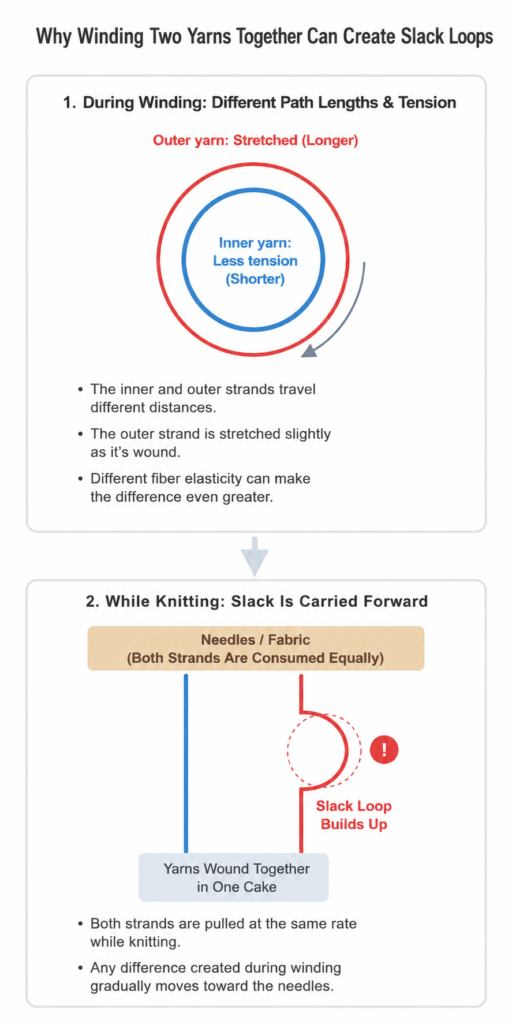
When two yarns are wound into the same cake, they don’t always travel exactly the same path.
As the yarn wraps around the curved surface of the cake, one strand may sit slightly closer to the outside while the other runs slightly farther inside.
Over hundreds or even thousands of wraps, these tiny differences can gradually accumulate, leaving one yarn slightly longer than the other.
There’s another issue as well.
When both strands are pulled from the same cake at the same time, they’re more likely to:
- become tangled with each other,
- wrap around one another,
- or develop unwanted twists.
As a result, maintaining even yarn tension becomes more difficult, which can affect the consistency of your finished fabric.
Real Experiences and Advice from Experienced Knitters
Everything we’ve discussed so far isn’t just theory.
Many experienced knitters—both in Japan and overseas—have shared the same advice based on their own knitting experiences.
Let’s take a look at a few examples.
Different Yarn Elasticity Can Leave One Strand Longer
On Reddit, a knitter asked whether two yarns should be wound into a single cake before knitting.
One reply explained:
The mohair and yarn, probably merino? will most certainly ”feed” into your fabric at different rates. Balling them together means you will (probably) end up with long loops of mohair as you knit along. Keeping them apart prevents this very annoying problem.
Source: Reddit r/knitting – “Knitting with two yarn strands held together – winding preferences??”
This perfectly illustrates the issue described earlier: different yarns stretch and relax differently, causing one strand to become loose while knitting.
Different Path Lengths Can Create Loose Loops
A similar question appeared on Yahoo! Japan’s Q&A service.
The knitter asked whether different cone yarns should be rewound together before holding them double.
One experienced knitter replied:
Don’t rewind them together. Always hold the yarns together as you knit. If you try winding them into one ball first, you’ll notice that one strand occasionally ends up longer than the other while you’re knitting.
Source: Yahoo! Chiebukuro – Question about holding yarns together
When combining different types of cone yarns—especially yarns of different thicknesses—it’s easy to imagine how the difference between the inner and outer paths of the cake can gradually build up.
The discussion also includes recommendations for useful tools that help manage multiple cone yarns while knitting, making it worth reading if you often work with cone yarn.
Pros and Cons of Winding Held-Together Yarns into One Cake
So, what actually happens if you wind two yarns into one cake instead of keeping them separate?
An interesting discussion on Knitting Paradise, one of the largest online knitting forums, compared both approaches.
In a thread titled “Knitting with 2 yarns…leave as 2 or combine into one”, one knitter summarized the advantages and disadvantages like this:
Separate balls
Pro – if the two yarns have different stretchability (is that a word?) it’s easier to control the flow of each of them against each other.
Con – the working strands can get tangled round each other.Combined balls
Pro – If the yarns are different colours/shades the mix will generally be more even than with separate balls.
Con – take care when winding the two balls together as it’s easy to stretch one and you can end up with huge loops of the other yarn.Source: Knitting Paradise – “Knitting with 2 yarns…leave as 2 or combine into one”
What’s interesting is that the discussion doesn’t say winding two yarns into one cake is always wrong.
Instead, it acknowledges that there are some advantages while also pointing out the potential drawbacks.
Overall, both Japanese and international knitting communities tend to recommend keeping the yarns in separate cakes rather than winding them together beforehand.
That said, I’d like to add one personal thought.
Although I haven’t tried winding held-together yarns into a single cake myself, it makes me wonder whether the risks would be much smaller if the two strands were exactly the same yarn—the same fiber, weight, and dye lot.
In that situation, differences in elasticity and path length would likely be minimal.
Even so, many knitters still prefer working from separate cakes to avoid potential issues with yarn tension and twisting altogether.
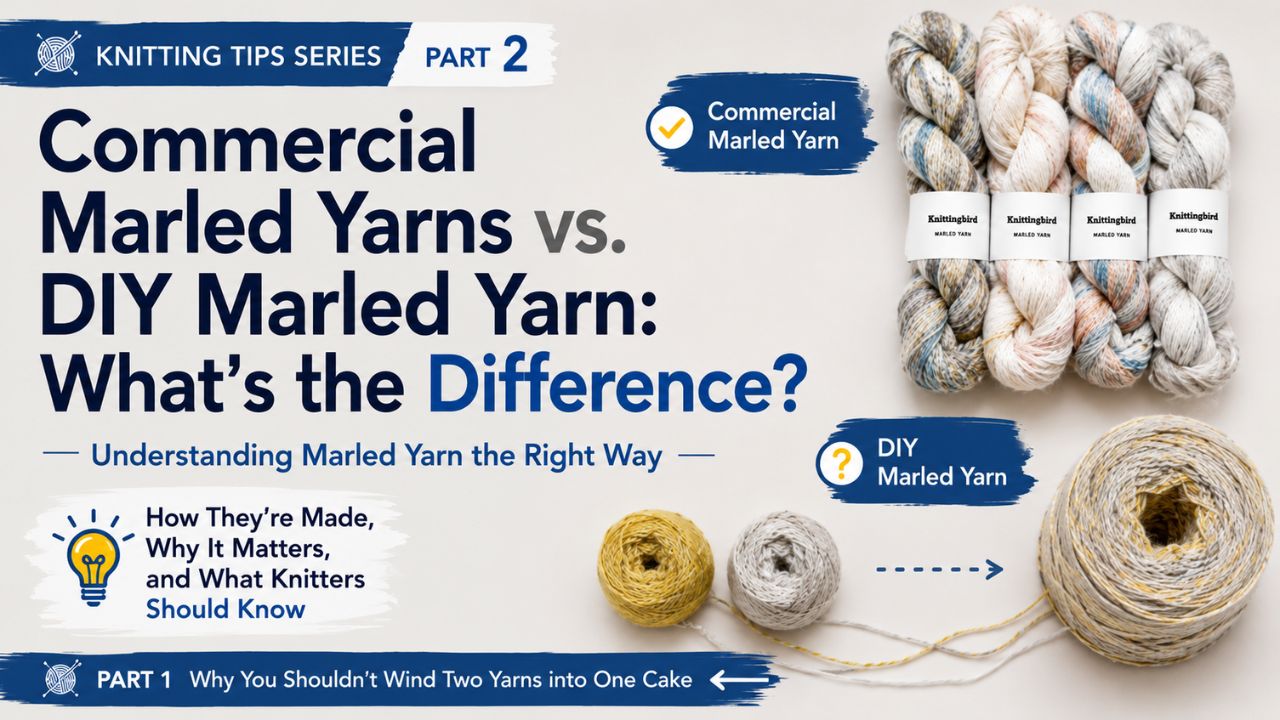
Next: Why Commercial Marled Yarns Work Differently
In this article, we’ve looked at why many knitters recommend keeping held-together yarns in separate cakes rather than rewinding them into one.
But that naturally raises another question:
If rewinding two yarns together at home can cause problems, why do commercially produced marled yarns work so well?
In the next article, we’ll explore the differences between commercial marled yarns and homemade combinations, including how they’re produced and why they behave differently in knitting.